What is a speech-to-text API?
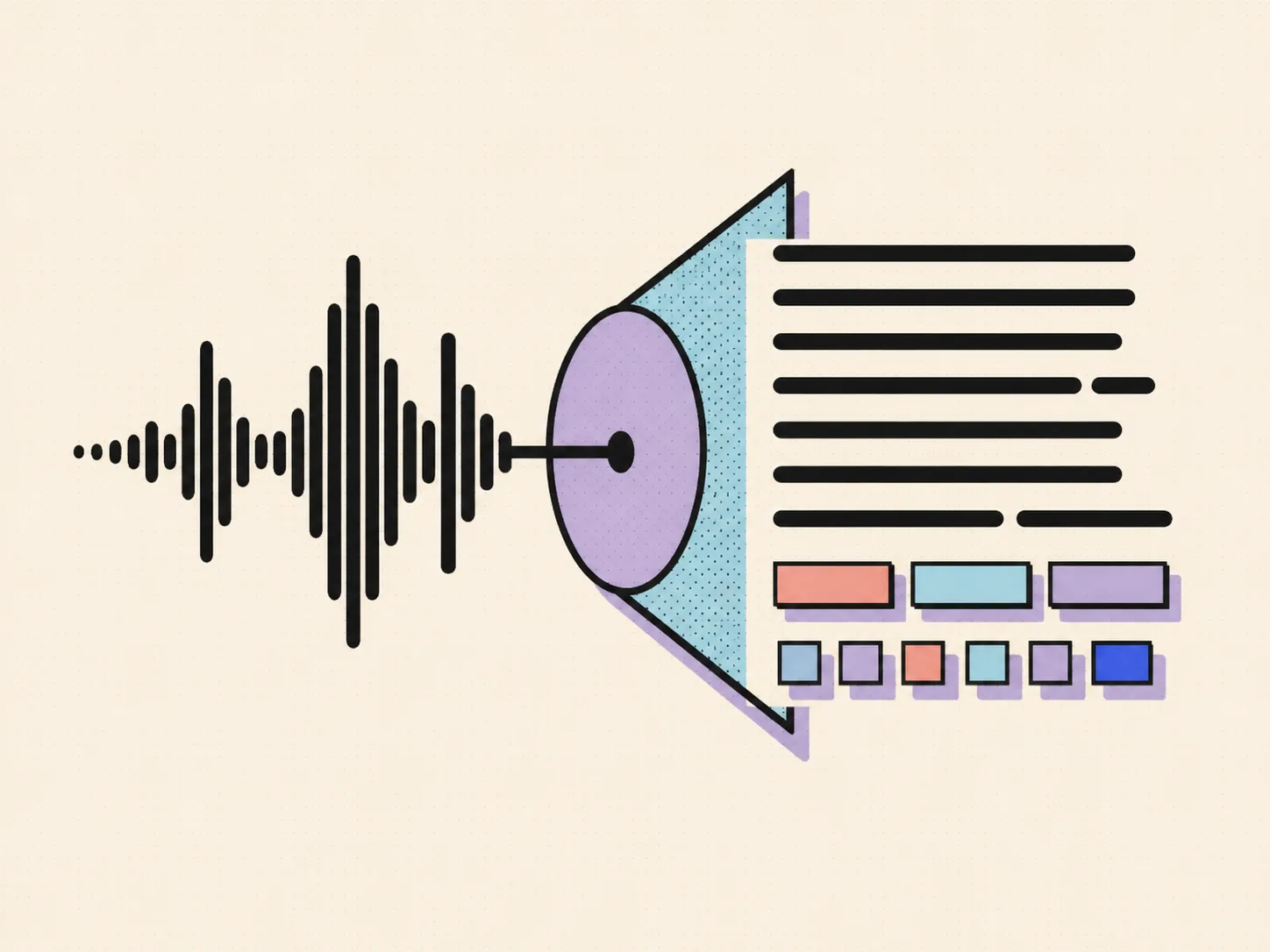
A speech-to-text API, also called automatic speech recognition or ASR, converts spoken audio into written text through a network call. A developer sends recorded or live audio and receives a transcript, often with timestamps, confidence scores, and optional speaker labels.
How should I compare speech-to-text APIs?
Compare speech-to-text APIs on four integration signals first: real-time streaming, speaker diarization, language coverage, and a pricing model that fits your volume. Once a shortlist forms, validate accuracy and latency yourself on audio that matches your use case, because vendor-reported numbers often come from different test sets.
What is the difference between real-time and batch transcription?
Real-time, or streaming, transcription returns text while audio is still arriving, which suits live calls and captions. Batch, or pre-recorded, transcription processes a completed file and returns the transcript afterward, usually at a lower price. Many providers charge more for streaming than for the same audio processed in batch.
How much does a speech-to-text API cost?
Cloud speech-to-text pricing usually runs from roughly $0.002 to $0.025 per minute, but the headline number hides real differences. Providers bill in different units, per minute, per hour, per second, or per token, and batch tiers are often far cheaper than streaming. Each provider profile lists the cheapest documented pre-recorded rate with the native unit and tier footnoted.
What is speaker diarization, and do I need it?
Speaker diarization separates and labels each distinct speaker in an audio stream, so a transcript reads as separate speakers rather than one block of text. It matters for meetings, call analytics, and interviews, and less for single-speaker dictation. Some providers document only speaker-change detection, which flags a switch without labeling each speaker.
Is there a free or open-source speech-to-text option?
Yes. OpenAI Whisper is open source under an MIT license, so it can be self-hosted with no per-minute fee, though you pay for the compute to run it. Most hosted APIs also offer free access, which the directory marks as a perpetual allotment, a time-limited trial, or a one-time credit.
Which speech-to-text API is the most accurate?
No single speech-to-text API is most accurate for every case, because accuracy depends on audio quality, accents, domain vocabulary, and background noise. Test two or three providers on audio that matches your workload and measure word error rate on the same files. This directory leaves accuracy fields empty until every provider can be measured on one benchmark.